Platforms that evolve are worth the subscription
Intelligent investment is not about buying technology once — it is about ensuring it keeps evolving.
Why subscriptions make sense: they keep platforms alive, secure, and ready for the next technological leap.
Subscriptions pay for evolution, not access
Insight: Subscriptions pay for evolution, not access — and the alternative is the next forced restart.
Platforms that evolve over time generate continuous returns — those that do not evolve simply fund future restarts.
The value of a subscription is not in monthly usage, but in the promise of longevity. Modern platforms are designed to survive changes in technology, languages, and infrastructure. Instead of rewriting code, you adapt models. Instead of reinvesting from scratch, you keep the innovation flow active.
This happens because a platform that doesn’t evolve turns every external change (security, integrations, standards) into an internal restart.
In one minute
- The real cost isn’t the subscription — it’s the next forced rewrite when the platform stops evolving.
- This happens because technology cycles outrun project amortization and contracts reward go-live, not ongoing fitness.
- Start by defining what “continuous evolution” means for your platform (cadence, compatibility, security, migration support) and measure it.
“Subscription cost” vs “restart cost”
Subscriptions are easy to attack in budget conversations because they look like an ongoing line item. Restarts are harder to see because they arrive as big programs, justified as “strategic transformation”.
If the platform is genuinely evolving, the subscription buys a shrinking backlog of upgrades and fewer large modernization resets. If it isn’t, the subscription becomes the down payment on a future rewrite.
Technology changes faster than project models
Technology cycles move faster than most systems’ useful lives. New languages, frameworks, security standards, and integration patterns appear long before a traditional project would be “fully amortized”. Fixed, one‑off project models cannot keep pace with that rhythm; they deliver something that is up to date on day one and increasingly misaligned thereafter.
At the same time, many buying models still focus on “project delivery” rather than continuous evolution. Contracts reward scope and go‑live dates, not the ability of the platform to stay current. The burden of upgrades, refactors, and migrations falls almost entirely on the client side, creating a hidden backlog of future rework that will eventually demand a major rewrite.
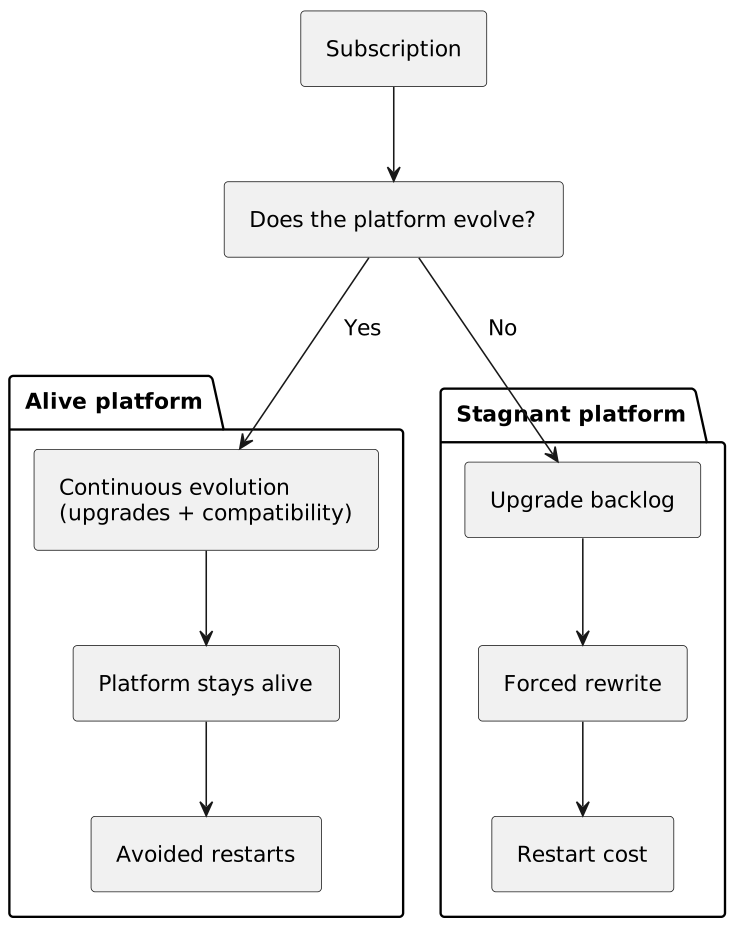
This is less urgent when the platform is low-change, low-dependency, and you fully control the stack. It becomes acute when ecosystem and security shifts are frequent and upgrades compete with product delivery.
How to tell if a platform is truly “alive”
Look for signals in release cadence, upgrade friction, security posture, and how much business logic survives a technology shift without being rewritten.
Living models. Business behavior lives in configuration/models and survives upgrades without a rewrite. The platform separates function from technology, enabling evolution without rupture. A good first move is to favor solutions based on metamodels and configuration, not rigid, code‑locked implementations.
Continuous upgrades. Upgrades are frequent, backward‑compatible, and operationally boring (no “big bang” projects). The subscription is funding ongoing fitness: security, standards, and ecosystem compatibility. A practical way to start is to evaluate whether the platform delivers upgrades that match your business rhythm and risk profile.
Sustainable value. Renewals correlate with fewer large modernization programs and less “upgrade backlog” in delivery teams. Paying for evolution is cheaper than rebuilding at each major tech shift. One simple move is to compare renewal cost with the expected cost of a forced rewrite — and invest where continuity is built in.
Make “continuous evolution” explicit in what you buy
Suggested moves — pick one to try for 1–2 weeks, then review what you learned.
Define what “evolution” means (and put it in the contract)
Define the evolution criteria you expect: upgrade cadence, backward compatibility, security patch SLA, migration support, and deprecation policy. If “evolution” stays vague, you only notice the gap when a rewrite becomes urgent.
Start by writing a one‑page set of criteria and using it in your next renewal or procurement review. Watch upgrade friction and surprise incidents during version changes.
Map upcoming change drivers (and isolate business logic)
Map which systems depend on technologies likely to shift in the next three years, then prioritize platforms that isolate business logic from infrastructure. The fastest way to turn subscriptions into restarts is to couple business behavior to short‑lived tech choices.
Start by picking three systems and listing their top external change drivers (security, integration standards, ecosystem shifts). Watch how often teams need “special projects” just to stay compatible.
Measure “restart risk” alongside cost
Track the upgrade backlog, rewrite probability, and time‑to‑upgrade as first‑class metrics alongside subscription cost. The ROI is in avoided rework and avoided resets, not in the invoice amount.
Start by adding one dashboard line: “time since last safe upgrade” and “estimated upgrade backlog”. Watch for fewer big‑bang modernization programs and a declining “upgrade debt” curve.
You see the same logic when you ask whether software is built to survive change.
If we ignore the need for continuous evolution, systems that are technically “working” will quietly become obsolete. They will block integration with new capabilities, make security and compliance harder, and slow down every attempt to experiment with new products or channels.
Intelligent investment is the kind that continues to pay off when technology changes.
How do you assess whether your platform subscription is actually buying continuous evolution?